Mary Tate building plans

Mary Tate’s Almshouses is one of the most important heritage assets in Mitcham Cricket Green Conservation Area.

It is Grade II listed strategically located by the historic cricket ground and part of the wider Cricket Green story of socially conscious benefactors addressing local needs for healthcare, homes and other support.

It is a much admired and appreciated part of Cricket Green’s social infrastructure and heritage, as evidenced by the level of public interest when it participates in Mitcham Heritage Day.

Over 20 years ago building plans on the important allotments to the rear were given permission but never implemented. They have re-emerged after the site was taken over by Croydon Almshouse Charities. An application for five homes, an office and a meeting room is now with Merton Council to decide.

There is a desperate shortage of truly affordable homes in Mitcham and we welcome efforts to address the problem. Having examined the plans, however, we don’t think that building on protected open space in the grounds of a listed building is the best way forward.

A lot has changed in the last 20 years and we know far more now about the importance of Mary Tate’s Almshouses and the value of green space.

The open land on which the development is planned has just been designated for protection in Merton’s new Local Plan. It is also now included in the London Historic Parks and Gardens Trust’s Inventory of historic parks and gardens. Merton Council itself has undertaken an appraisal of the Conservation Area and a study of local character in the last few years which both identify the special value of open spaces to the neighbourhood. It would be perverse to set all this new insight aside because of a decision made two decades ago.

Our review of the plans shows that the buildings proposed are oversized, poorly designed and the schemes as a whole isn’t practical. The planning application also lacks vital information needed to make any informed decision.

We estimate around 67% of the existing open space is lost to development. This fundamentally changes the character of the Mary Tate site which flips from being predominantly green space to predominantly developed.

The proposed new buildings lack architectural merit. They present a barren, rectangular appearance out of character and in sharp contrast with the existing buildings. The applicant recognises these for being “constructed at considerable expense” and benefiting from “architectural detailing that is uncommon on buildings constructed for lower income residents”. This cannot be said of the new proposals. The plans also include a significant office space and an undersized meeting room which cramp the existing buildings and offer little public benefit.

As well as being poorly designed and harming the existing listed buildings we find the plans don’t work at a practical level on issues such as access, bins, room sizes and safety.

It is unclear whether access down a narrow shared driveway outside the site and through a new gate involving demolition of part of the Grade II listed boundary wall will work in practice. It is equally very clear that the plans to use two small existing outhouses to store bins is a non-starter given their size, layout and the number of bins involved.

The new homes fall short on London-wide space standards that require storage space to be provided. This is a particular problem given the need for many to find somewhere to keep a wheelchair or other mobility aids as well as personal posessions. With rising heating costs it is disappointing to see room designs that have the front door opening direct into the living space. This will be a major source of heat loss on a daily basis during winter months.

Getting around and away from the buildings will also be challenge. There is no evidence provided for how residents in the new buildings to the rear can be evacuated if fire breaks out in the existing Almshouses blocking them from the road. Getting around the site will also be a daily challenge given some of the routes are as narrow at 1.5m wide. This is despite the extensive use of mobility scooters and wheelchairs by residents.

We’ve also been surprised and disappointed by how the plans have emerged.

Despite Croydon Almshouse Charities social purpose and values there has been no prior consultation with the local community and even the existing Almshouse residents didn’t know what was in the planning application before it was submitted. Strikingly, there is no consideration of the impact of the building works on the existing residents in the plans. This is despite their vulnerability to the noise, dust and other harm from construction works. We have called for evidence in the form of a “method statement” that construction can be managed without harm to residents before any decision can be made on the proposals.

Our conclusions are emphatic. Despite the obvious need for more affordable places to live this is not a finely judged decision. The proposals irreversibly change and harm the character of Mary Tate’s Almshouses. They develop a large area of protected open space and cause demonstrable harm to the significance of the Grade II listed building and Conservation Area. The site area of Mary Tate’s Almshouses changes from being predominantly open space to predominantly developed.

The evidence of seeking to extract too much from the site is also apparent in the undersized homes, lack of internal storage, restricted access routes, inadequate bin storage and cramped meeting space. There may also be insurmountable issues relating to the construction of the new buildings given the restricted site and vulnerability of existing residents. We find this all particularly problematic given the caring mission of Croydon Almshouse Charities and the circumstances of the existing and any future residents.

We are asking Merton Council to reject the planning application and stand ready to work with Croydon Almshouse Charities on how it can contribute to meeting housing needs in Mitcham.

Read our full submission on these plans Mary Tates Almshouses – Nov 22

Managing Mitcham Common

Mitcham Common is the largest and most significant open space in our neighbourhood.

At 182 hectares it is bigger than Hyde Park or Kew Gardens and it is enjoyed by thousands.

The Common only exists as a result of public campaigns in both the 19th and 20th centuries to protect it from gravel extraction, new roads, landfill and encroaching development. The M23 was once planned to carry on north and run right across it.

As time passes each new generation finds Mitcham Common is more and more valuable to all our lives. It also supports a vast diversity of wildlife. Thousands of us discovered it during lockdown and there is immense public interest in its future. It should be no surprise that Friends of Mitcham Common is one of the largest membership groups in our area.

Mitcham Common matters. It is highly valued by those who enjoy it and yet there are many more who are still unaware it exists or of the rich experiences it can offer. Too often it is seen as a scary wasteland. This all presents opportunities for Mitcham Common to matter even more.

We are, therefore, delighted to see a new Management Plan is in preparation under the guiding hand of Mitcham Common Conservators who own and run it under 19th century legislation. The new Management Plan cannot come quickly enough. The last one ran out ten years ago and the public have not had any opportunity to inform the management approach since 2007.

We have fed in views on what should be in the new Management Plan. The draft suggests it will offer much for the wildlife of Mitcham Common and it is good to see the strong line against the clutter of bins, signs, sports pitches and seats and the laying tarmac paths. We also agree that opportunities for major tree planting on Mitcham Common are limited if it is to retain its open nature and important habitats.

Despite these positives the Management Plan is a deeply disappointing document. We find it narrowly drawn and unlikely to generate the public and financial support needed to provide Mitcham Common with a sustainable future. Instead it is reliant on short term financial fixes which could harm the Common such as mass participation events, music festivals and advertising. These provide no basis for securing its long term future.

We are invited to respond to the draft Management Plan by making “comments relevant to specific parts of the draft document”. This implies a belief that the draft is almost there and only need tweaks and adjustments to provide what Mitcham Common needs to guide its future. Instead we believe there are fundamentals still missing and a misconception of what Mitcham Common offers and what’s needed.

The new Management Plan should be a watershed. It should redefine how Mitcham Common relates to the thousands of people who both use it and would be willing to do more to support it. The Common has been managed for too long as if it were run by a local authority. Inward looking, focused more on risk than opportunity, lacking creativity and managed remotely from the people who use it. Yet the Conservators have few of the constraints of local government and their independence means they can take a very different approach more suited to the times.

We believe Mitcham Common needs to be managed with the mindset of a charity or trust not a local authority. It needs to inspire and to tap into the energy and support for those thousands of people who people care about and benefit from what it offers. Currently, volunteer support is too often turned away or constrained by unwelcoming attitudes, excessive charges or unnecessary requirements for “professional supervision”. Mill House Ecology Centre lies idle most of the time when it should be fizzing with activity as a community and educational hub. The army of citizen scientists interested in Mitcham Common’s ecology, history and landscape remains untapped. Mitcham Common has no official presence on social media. By any measure of the level of community support, volunteer activity or external funding, Mitcham Common compares poorly with equivalent green spaces across London and beyond.

Thinking like a local authority isn’t surprising given the majority of Mitcham Common Conservators are councillors appointed by Merton, Sutton, Croydon and the City of London. For too many their priorities lie elsewhere and attendance at meeting is patchy. This should change. While there is a place for councillors as Conservators they should not be in the majority. The boroughs can use their powers to appoint independent voices, bringing fresh insight and knowledge and involving those who use and volunteer on the Common. This will bring wider perspectives to the discussion and decisions.

The Common is also run day to day under a contract with Merton Council’s Greenspaces team. Mitcham Common’s Manager is a Merton Council employee. While this has some advantages it makes it hard to think beyond the local authority mind-set and the skills and experience needed to grow public support for the Common are missing.

These arrangements are among many reasons why we are asking the Conservators to commission an independent review of themselves to learn from their experience and improve the way they work. It’s only healthy for any organisation to take a look at itself every few years and the Conservators have been running the Common for 131.

We are also keen to see the management contract currently held by Merton Council re-tendered. This is another example of basic good practice to ensure the management approach is effective and cost efficient. It would also allow the tender to evolve to bring on new skills and experience to address the priorities in the new Management Plan, including building the case for more visitor and volunteer support and a more imaginative approach to income generation than is apparent in the current draft Management Plan.

We’ve asked for the Management Plan to be based on a bold vision and to be well supported by a clear objective and aims. The current draft struggles to do this. It also lacks key information that can inform important targets against which to measure ongoing work. We firmly believe that for the Management Plan to be effective these need to be incorporated, and there should be a commitment to publish a progress report each year.

The Management Plan’s approach can also do more to recognise the value of Mitcham Common’s landscape and heritage as well as its wildlife. It should recognise and protect the value of its relatively dark skies and tranquillity.

There are also other environmental benefits to address, including the role of Mitcham Common in reducing the impact of climate change, managing water resources, reducing urban overheating and mitigating air pollution. These are all in addition to the significant contribution the Common makes to the wellbeing of those who use it.

We have also asked for a more outward looking approach that recognises Mitcham Common is part of a much larger green landscape stretching all the way to Beddington Park and including Beddington Farmlands, Mitcham’s Greens and the open land by the railway north of BedZed. Mitcham Common should be part of the efforts to recognise this key resource at the heart of Wandle Valley Regional Park, looking beyond the boundaries of ownership to join things up and improve the environment.

The new Management Plan is virtually silent on some important outlying areas of Mitcham Common, including the significant area which lies within Mitcham Cricket Green Conservation Area around Mitcham Garden Village and running south towards Mill Green. This area has been threatened by a new access road to Willow Lane Industrial Estate and is one of many subject to significant and persistent flytipping.

The next Management Plan period also needs to see a much stronger evidence base on which to make decisions over Mitcham Common’s future. It is both striking and shocking that the Management Plan admits “there is no available data for the number of visitors to the Common” and nothing is known about those who do visit. The ecological data is also partial and out of date. Large parts of the Management Plan are based on a 1984 report that even leaves out some important parts of the Common. The Management Plan has also been prepared with no assessment of Mitcham Common’s landscape and its character available.

Mitcham Common already plays a vital role in our neighbourhood. Yet it can do so much more to tackle some of the most important challenges of our times. At a time of climate crisis, declining wildlife, rising air pollution and growing concerns over public health, mental wellbeing and civic pride we need to be able to turn to places like Mitcham Common. With the right Management Plan, revitalised Conservators and a dynamic new relationship with the users of the Common and the local community we know we will be able to find some of the answers on our doorstep.

Read our full response to the draft Mitcham Common Management Plan – Mitcham Common Management Plan – Oct 22

The Management Plan is hosted on Mitcham Common Conservators’ website – https://mitchamcommon.org/category/all-publications/ 

Pushing up – Drive House plans

New planing freedoms are encouraging property owners to add extra storeys to their buildings. We have seen a number of proposals along London Road, including Deseret House next to Glebe Court, and the latest is for Drive House.

The plan is to add two storeys to the existing three storey building that runs from Pawelek to Justin Plaza. It includes an important local shopping parade and two storeys of flats.

Where well designed and located we are supportive of efforts to make more effective use of brownfield sites and existing buildings to provide homes.

Our representations on Merton’s new Local Plan supported the allocation of 11 sites for the development of hundreds of new homes. Unfortunately the Drive House plans are for poor quality accommodation in a poorly designed vertical extension.

Drive House is designed as a three storey building and it sits well in London Road. With all the new build going on around it, including on the former KwikFit site and soon to be on the car wash site, it is important to retain existing building heights that protect the character of the townscape and avoid a canyon of new building along London Road.

The detailed design of the proposed vertical extension is also harmful to the external appearance of Drive House. It lacks appropriate architectural detailing and relates uneasily to the existing building which was not designed to be of this scale.

We also question whether Drive House qualifies for the fast track planning freedoms under which the application has been made. These exclude proposals within 3km of an aerodrome. The helipad at St George’s Hospital falls within this definition and it is just under 3km away.

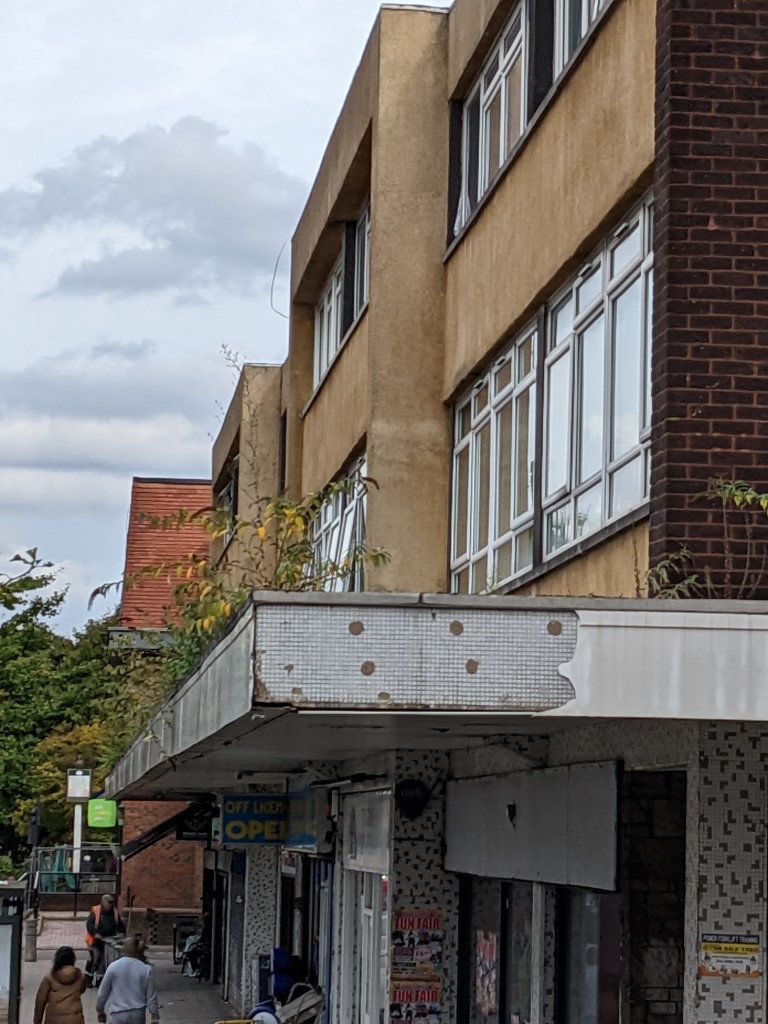
Whatever happens to the plans it is important that the owners maintain the building better. It has been allowed to develop a serious maintenance backlog and action is needed to address the decaying awning which has lost render, causes leaks in the shops below and is now surmounted by numerous buddleia plants. Merton Council has powers to require this to be remedied without giving permission for new development.

You can read our full response here.

Mitcham Heritage Day Saturday 10 September 2022

10:00am to 4:30pm Saturday 10 September 2022

Mitcham Heritage Day is our annual celebration of local heritage.

Thank you to all the volunteers who have worked hard to help make Mitcham Heritage Day 2022 happen, to those who have given financial support, and to Merton Council’s Heritage and Local Studies service for providing exhibitions. 

Download our map for use on the day.

If you enjoy Mitcham Heritage Day do please consider becoming a member. Your membership fee will help us run Mitcham Heritage Day in the future, as well as supporting all the other work we do.

Here is the programme – do check back before coming along for any last minute additions and alterations.

Mitcham Cricket Green Community & Heritage
10.30am guided walk around the gems of Mitcham Cricket Green. Allow 1 hour.
Assemble on cricket ground opposite pavilion.
We will stop at the Canons Café where Walk and Talk walkers can join us.

Mitcham Cricket Green Community & Heritage
10.00am to 4.30pm Heritage Shorts self-guided tour.
Learn more about Mitcham Cricket Green at a range of information points. Visit as a self-guided walk or check each location out as you are passing. All the information points can be found on the downloadable map on this page – they are marked with an orange H.

Mitcham Parish Church – the current church building is celebrating 200 years since opening
10.00am to 4.00pm church open.
10.30am to 12.00pm bell tower ringing room open with bell ringing demonstrations. NB the tower is accessed via a spiral staircase.
1.00pm and 3.00pm Introduction to the Graveyard talk and tour. Participants should wait in the church.
Exhibitions relating to the church building and its history back to Medieval times.
Exhibition provided by Merton Council’s Heritage and Local Studies service What’s in a name? : The history behind Mitcham streets and properties.
Refreshments.

Cricket Green School
10.00am to 4.30pm access via main gate of school on Church Road.
See the remains of the Grade II listed arch of 14th Century Hall Place in school grounds.

Wandle Industrial Museum
10.00am to 4.30pm museum open as normal. The museum has exhibitions on the history and heritage of the people and industries of the Wandle Valley. Mitcham has a rich heritage of industry which included a number of mills on the River Wandle. ​Volunteers will be on hand to answer your questions.
10.30am unveiling of the final part of the museum’s Changing the View project. This project aims to improve the external view of the museum building.

Conservation Station at Wandle Industrial Museum
12.00pm to 3.00pm. Drop in to meet professional book conservator Katarina Kelsey, who will provide Mitcham Heritage Day’s very own Repair Shop. Katarina will show you historic book structures, the creepy crawlies and materials that eat books up, and will demonstrate how book conservators repair historic books and manuscripts. Materials provided for children to make their own origami book structures. 

Mitcham Cricket Club
10.30am to 4.00pm cricket pavilion open.
12.00pm walk the boundary for a talk on the history of cricket on the Green. Starts and ends at the cricket pavilion.
Exhibition A Mitcham Man’s 1876 tour of Australia & New Zealand with Lillywhite’s XI including viewing the “lost” painting of the Incident at the Otira Gorge.
Refreshments.

The Canons
12.00pm to 4.00pm house open for visitors.
Activities.
Exhibition.

Mitcham Methodist Church
10.00am to 4.30pm church open.
Volunteers available throughout the day to tell visitors about the church and show them around.

Saints Peter and Paul Roman Catholic Church
11.00am to 2.00pm church open.
11:00am, 12:00pm, 1:00pm guided tours of church and garden.
Exhibition Photographs of the Consecration in the parish room.
Exhibition provided by Merton Council’s Heritage and Local Studies service A Time of New Beginnings : Images of Mitcham during its 1930s heyday.
Refreshments.

The Small Quarter
The Ravensbury, 260 Croydon Road, CR4 4JA. About 5 minutes walk from No10 on the Mitcham Heritage Day flyer map.
12.00pm to 3.30pm open to visitors.
The Small Quarter is a rapidly developing garden that aims to become a sustainable community asset for Mitcham and heritage for the future.
Informal tours, including information about the Blue House Cottages that used to sit on the site (dating back to the 18th Century) and also the new rainwater harvesting system.

Mitcham Community Choir
Look out for impromptu pop-up singing at different locations from Mitcham Community Choir throughout the day.

Melanie’s Walk
1.30pm start at Mitcham Junction Railway Station Carshalton Road, CR4 4HN. Allow 1.5 to 2 hours.
A walk around Mitcham and Mitcham Common, visiting various heritage sites.
Finishes at the Wandle Industrial Museum.

Mary Tate’s Almshouses
Event cancelled
1.15pm talk on the history of Mary Tate, her almhouses and her almswomen.
2.00pm talk about Croydon Almshouses Charities (owner of the cottages) and future plans.
Crafts area with competition for the best Mitcham Heritage Day poster, winner announced 1.15pm
Exhibition on the history of the cottages.
Refreshments and sweet cart.


Celebration evening concert at Mitcham Parish Church
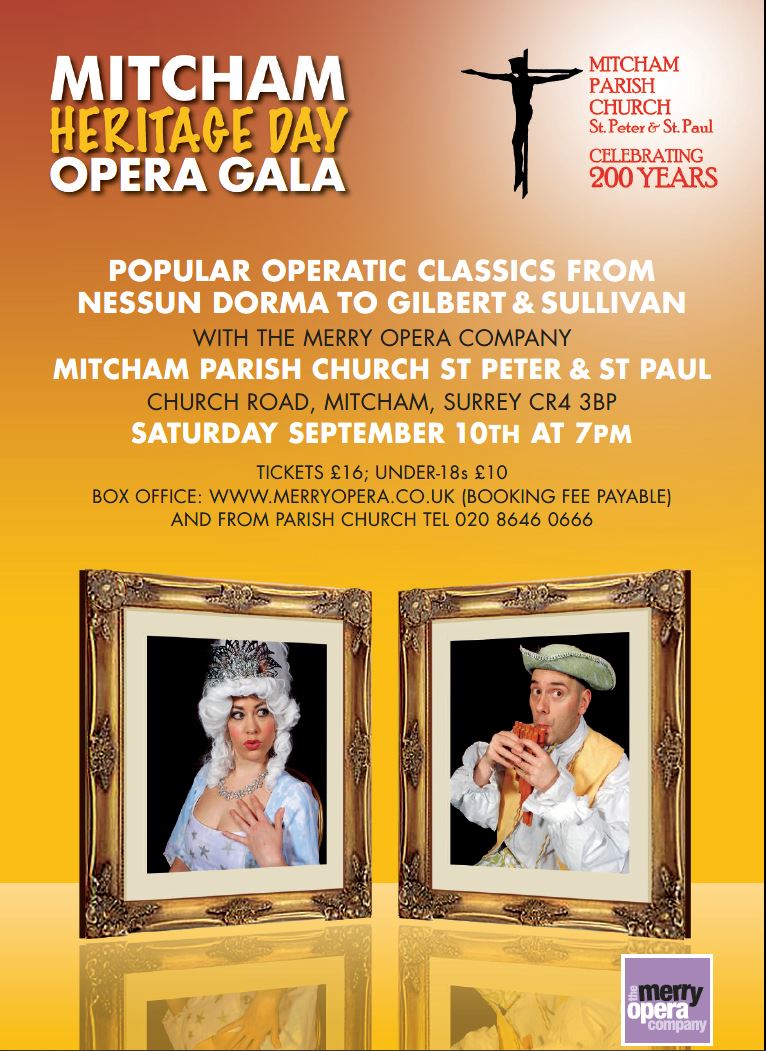
7.00pm Mitcham Heritage Day Opera Gala.
The Merry Opera Company presents popular operatic classics from Nessun Dorma to Gilbert & Sullivan.
Tickets £16 (£10 under 18s) from 020 8646 0666.


Mitcham Heritage Day is part of Wandle Fortnight 2022 and Heritage Open Days.

Thanks go to Wandle Fortnight and The Canons (via the National Lottery Heritage Fund and the National Lottery Community Fund) for their financial support.


Local Plan scrutiny begins

Merton Council’s new planning blueprint is about to be subject to independent examination by Government appointed inspectors.

This will review a range of topics in a series of hearing at the Civic Centre. The hearings begin on 14 June and are expected to run well into the autumn. They will be open to the public to attend as observers.

We’ve written before about how important the Local Plan is for Mitcham.

The Inspectors have already highlighted serious issues noting “A number of the representations made also highlight drafting errors such as incorrect policy numbers, incomplete sentences, and missing text along with potential factual errors. These matters are exacerbated by a lack of integration in the Plan’s presentation and a lack of clarity as to how the chapters relate to one another. Overall, the Plan therefore reads in a somewhat fragmented and disjointed manner and the strategy is therefore challenging to understand and follow.” We are pleased that these issues are finally getting the attention they deserve.

Topics to be covered at the hearings include the overall vision, tall buildings, green space and the development of sites including Benedict Wharf, Mitcham Gasworks, Wilson Hospital, and Merton Council’s own plans for The Canons nursery and Raleigh Gardens car park. It is also an opportunity to restate the case for Mitcham to be recognised as a village.

We’ve asked to speak on five key issues and you can read our latest submissions below.

Local elections 2022 – our Cricket Green questions for candidates

We will have three new ward councillors for Cricket Green following the Local Elections on 5th May. All three incumbents are stepping down, two after a single four year term.

As the local civic society we have asked 10 questions about key local issues of all 11 candidates from the five political parties standing in Cricket Green ward. The questions cover issues including the future of the Wilson, the impact of high rise tower blocks and how Cricket Green can best respond to the climate and ecological emergencies. Candidates have also been asked about how they will secure the future of cricket on the green and protect the Conservation Area. We have also asked how they will support the character of Mitcham Village and ensure swift action on fly tips. Candidates have also shared their favourite places in Cricket Green.

Every political party has responded. We thank them for engaging. Their answers are revealing. As a local charity it is not for us to take sides in the election. The responses speak for themselves and we hope you find them useful. We look forward to working with the successful candidates when they become our ward councillors after the election.

Read the responses to our Cricket Green questions – Local election 2022 – party responses