Category Archives: Submissions

Caring for trees

The way we care for trees is a barometer of how much we care about the places we live, work and play in. Trees enrich our lives, keep us healthy, reduce pollution, provide shade and support wildlife. They remind us of our heritage and they will last long into the future.

It’s no surprise therefore that people care deeply about how treees are looked after, spend hundreds of volunteer hours planting and caring for them and get angry when they are needlessly felled.

Now, finally, Merton Council is to have a strategy for the trees that it owns. We’ve had sight of the draft and fed in our thoughts. You can read them below. There’s much to welcome but so much more that can be done.

The best strategies set out a vision, provide a plan for how to achieve it and put in place the resources for delivery. This draft Strategy only begins to provide this. It needs to commit to increasing Merton’s tree canopy not just to planting new trees, and to set an ambition well above the 10% target for London as a whole. It also needs to set clear deadlines for delivery and set out how both capital and revenue funding will be forthcoming from Council budgets, grants and other funding sources.

Trees are the responsibility of many Merton Council departments and what happens on our streets and in our green spaces is largely undertaken by contractors. Too often these different parts operate in conflict with each other. Some of the biggest tree losses in and around Cricket Green have been down to Merton Council itself.

The development of The Canons nursery will wipe clean an area which Merton Council’s own consultants recognise as being of “significant ecological value” and it threatens Merton’s Tree of the Year. Other mature trees have been needlessly felled in front of The Canons house and the new Mitcham Bridge has come at further needless damage to our tree canopy. On our streets tree pits have been tarmacked and trees lost to highway “improvements”. The new Tree Strategy is an opportunity to draw a line and bring the different parts of Merton Council together.

Its also important that the new Strategy is based on good data. The draft suggests Merton Council has no responsibility for shrubs and hedges barely get a mention. The data presented uses outdated ward boundaries and there is no record of Merton’s very special veteran trees or those which commemorate important events. More can be done by Merton Council to protect its own trees with Tree Protection Orders in both Conservation Areas and elsewhere.

The new Strategy can do more to tap into the love that local people have for trees. Tree Warden Group Merton, Friends and other like-minded groups do far more for Merton’s trees than many realise.

Many of us have seen or been involved in trees being planted. This is only the beginning. Those trees need to establish themselves, be pruned, mulched and above all watered in the first few years of their life and during the increasing number of dry spells. So much of this is done by volunteers and too much of it is made too difficult. Volunteers need access to taps, to mulch, to tools and to advice. Local people also undertake research, organise walks, prepare tree trails, nominate sites for new trees and use citizen science to increase our collective understanding. All this and more should be embraced by a Tree Strategy which puts community collaboration at its core.

Read our full submission on Merton Council’s draft tree strategy Merton Tree Strategy – response Nov 22

Managing Mitcham Common

Mitcham Common is the largest and most significant open space in our neighbourhood.

At 182 hectares it is bigger than Hyde Park or Kew Gardens and it is enjoyed by thousands.

The Common only exists as a result of public campaigns in both the 19th and 20th centuries to protect it from gravel extraction, new roads, landfill and encroaching development. The M23 was once planned to carry on north and run right across it.

As time passes each new generation finds Mitcham Common is more and more valuable to all our lives. It also supports a vast diversity of wildlife. Thousands of us discovered it during lockdown and there is immense public interest in its future. It should be no surprise that Friends of Mitcham Common is one of the largest membership groups in our area.

Mitcham Common matters. It is highly valued by those who enjoy it and yet there are many more who are still unaware it exists or of the rich experiences it can offer. Too often it is seen as a scary wasteland. This all presents opportunities for Mitcham Common to matter even more.

We are, therefore, delighted to see a new Management Plan is in preparation under the guiding hand of Mitcham Common Conservators who own and run it under 19th century legislation. The new Management Plan cannot come quickly enough. The last one ran out ten years ago and the public have not had any opportunity to inform the management approach since 2007.

We have fed in views on what should be in the new Management Plan. The draft suggests it will offer much for the wildlife of Mitcham Common and it is good to see the strong line against the clutter of bins, signs, sports pitches and seats and the laying tarmac paths. We also agree that opportunities for major tree planting on Mitcham Common are limited if it is to retain its open nature and important habitats.

Despite these positives the Management Plan is a deeply disappointing document. We find it narrowly drawn and unlikely to generate the public and financial support needed to provide Mitcham Common with a sustainable future. Instead it is reliant on short term financial fixes which could harm the Common such as mass participation events, music festivals and advertising. These provide no basis for securing its long term future.

We are invited to respond to the draft Management Plan by making “comments relevant to specific parts of the draft document”. This implies a belief that the draft is almost there and only need tweaks and adjustments to provide what Mitcham Common needs to guide its future. Instead we believe there are fundamentals still missing and a misconception of what Mitcham Common offers and what’s needed.

The new Management Plan should be a watershed. It should redefine how Mitcham Common relates to the thousands of people who both use it and would be willing to do more to support it. The Common has been managed for too long as if it were run by a local authority. Inward looking, focused more on risk than opportunity, lacking creativity and managed remotely from the people who use it. Yet the Conservators have few of the constraints of local government and their independence means they can take a very different approach more suited to the times.

We believe Mitcham Common needs to be managed with the mindset of a charity or trust not a local authority. It needs to inspire and to tap into the energy and support for those thousands of people who people care about and benefit from what it offers. Currently, volunteer support is too often turned away or constrained by unwelcoming attitudes, excessive charges or unnecessary requirements for “professional supervision”. Mill House Ecology Centre lies idle most of the time when it should be fizzing with activity as a community and educational hub. The army of citizen scientists interested in Mitcham Common’s ecology, history and landscape remains untapped. Mitcham Common has no official presence on social media. By any measure of the level of community support, volunteer activity or external funding, Mitcham Common compares poorly with equivalent green spaces across London and beyond.

Thinking like a local authority isn’t surprising given the majority of Mitcham Common Conservators are councillors appointed by Merton, Sutton, Croydon and the City of London. For too many their priorities lie elsewhere and attendance at meeting is patchy. This should change. While there is a place for councillors as Conservators they should not be in the majority. The boroughs can use their powers to appoint independent voices, bringing fresh insight and knowledge and involving those who use and volunteer on the Common. This will bring wider perspectives to the discussion and decisions.

The Common is also run day to day under a contract with Merton Council’s Greenspaces team. Mitcham Common’s Manager is a Merton Council employee. While this has some advantages it makes it hard to think beyond the local authority mind-set and the skills and experience needed to grow public support for the Common are missing.

These arrangements are among many reasons why we are asking the Conservators to commission an independent review of themselves to learn from their experience and improve the way they work. It’s only healthy for any organisation to take a look at itself every few years and the Conservators have been running the Common for 131.

We are also keen to see the management contract currently held by Merton Council re-tendered. This is another example of basic good practice to ensure the management approach is effective and cost efficient. It would also allow the tender to evolve to bring on new skills and experience to address the priorities in the new Management Plan, including building the case for more visitor and volunteer support and a more imaginative approach to income generation than is apparent in the current draft Management Plan.

We’ve asked for the Management Plan to be based on a bold vision and to be well supported by a clear objective and aims. The current draft struggles to do this. It also lacks key information that can inform important targets against which to measure ongoing work. We firmly believe that for the Management Plan to be effective these need to be incorporated, and there should be a commitment to publish a progress report each year.

The Management Plan’s approach can also do more to recognise the value of Mitcham Common’s landscape and heritage as well as its wildlife. It should recognise and protect the value of its relatively dark skies and tranquillity.

There are also other environmental benefits to address, including the role of Mitcham Common in reducing the impact of climate change, managing water resources, reducing urban overheating and mitigating air pollution. These are all in addition to the significant contribution the Common makes to the wellbeing of those who use it.

We have also asked for a more outward looking approach that recognises Mitcham Common is part of a much larger green landscape stretching all the way to Beddington Park and including Beddington Farmlands, Mitcham’s Greens and the open land by the railway north of BedZed. Mitcham Common should be part of the efforts to recognise this key resource at the heart of Wandle Valley Regional Park, looking beyond the boundaries of ownership to join things up and improve the environment.

The new Management Plan is virtually silent on some important outlying areas of Mitcham Common, including the significant area which lies within Mitcham Cricket Green Conservation Area around Mitcham Garden Village and running south towards Mill Green. This area has been threatened by a new access road to Willow Lane Industrial Estate and is one of many subject to significant and persistent flytipping.

The next Management Plan period also needs to see a much stronger evidence base on which to make decisions over Mitcham Common’s future. It is both striking and shocking that the Management Plan admits “there is no available data for the number of visitors to the Common” and nothing is known about those who do visit. The ecological data is also partial and out of date. Large parts of the Management Plan are based on a 1984 report that even leaves out some important parts of the Common. The Management Plan has also been prepared with no assessment of Mitcham Common’s landscape and its character available.

Mitcham Common already plays a vital role in our neighbourhood. Yet it can do so much more to tackle some of the most important challenges of our times. At a time of climate crisis, declining wildlife, rising air pollution and growing concerns over public health, mental wellbeing and civic pride we need to be able to turn to places like Mitcham Common. With the right Management Plan, revitalised Conservators and a dynamic new relationship with the users of the Common and the local community we know we will be able to find some of the answers on our doorstep.

Read our full response to the draft Mitcham Common Management Plan – Mitcham Common Management Plan – Oct 22

The Management Plan is hosted on Mitcham Common Conservators’ website – https://mitchamcommon.org/category/all-publications/ 
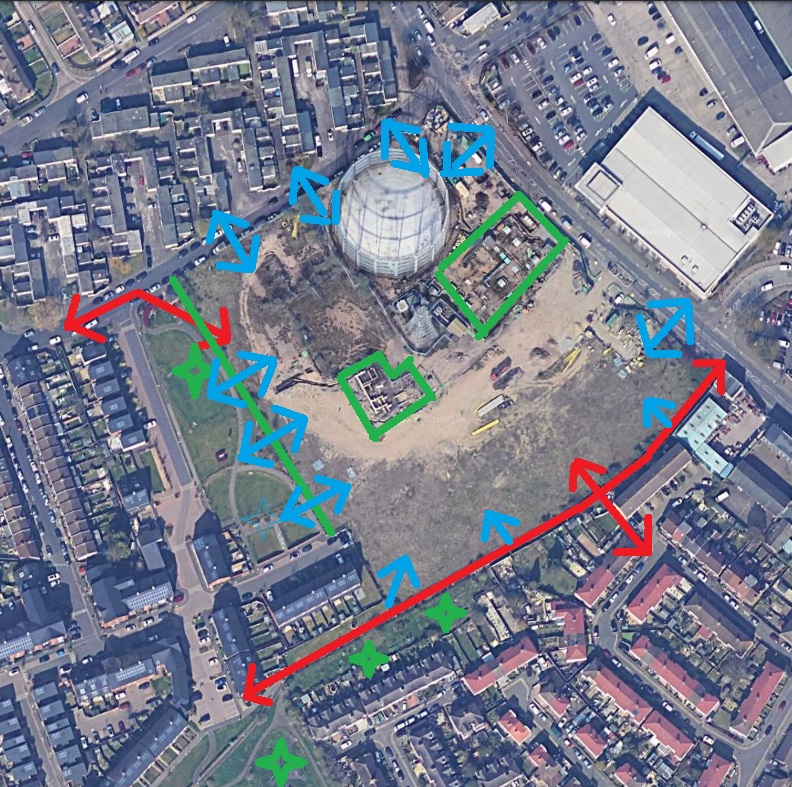
Future of Mitcham Gasworks could determine character of Mitcham

Developers are considering building 13 storey tower blocks on Mitcham Gasworks that would be fully 15meters (more than 60%) taller than the bell tower on Mitcham Parish Church.

The current plan is for no public consultation on the development until after the design has been firmed up.

This is a proposal with huge ramifications for Mitcham and here we set out the issues and our views on how Mitcham Gasworks can be developed to provide hundreds of homes more in keeping with the local area.

The locally listed gasholder on Mitcham Gasworks was demolished just before Christmas clearing the way for a major development on the edge of Mitcham’s village centre.

The decision over what gets built is already shaping up to be pivotal in deciding on the future of Mitcham.

Will Mitcham be more like Carshalton Village or take a different direction and follow Colliers Wood and Hackbridge?

Will Mitcham retain its character of low and medium rise homes built at gentle density around an historic pattern of streets and green spaces? Or are we now looking at an alternative future where high rise tower blocks create something very different?

We’re keen to see the Mitcham Gasworks site used to provide hundreds of new homes. We’ve supported it being allocated for major development in Merton Council’s new Local Plan and have now met with the prospective developers, St William who are part of the Berkeley Group.

St William have so far refused to share details of what they are considering for the site despite them being put to Merton’s Design Review Panel last month. We’re told they are being amended following the Panel’s meeting.

It seems the local community is unable to be trusted with seeing how the designs develop, and will not be given the opportunity to inform the thinking at this crucial stage. Instead a basic “consultation” event for a preferred plan is being arranged for early in 2022 – after all the main creative work in deciding what will be built has been finished.

We’re told the current plans are for 650 flats rising to a towering 13 storeys.

Only around one third of the new homes may meet the official definition of “affordable” (and even this remains out of the range of most local people) and there will be a large number of “single aspect” flats with windows on just one side.

The decision over the future of Mitcham Gasworks is too important to just wait and see what the developers come up with.

We’ve prepared a 12 point summary of our expectations for the site and how it should be developed. Key points include:

  • New buildings should be no greater than six storeys high and the scale of development should respect Merton Council’s planning expectations for no more than 400 homes on the site.
  • The design should feel like a natural extension of Mitcham, creating a new neighbourhood based on streets and avoiding alien tower blocks with no local precedent.
  • People should be able to walk and cycle but not drive through the site and it should open up new and improved routes to Church Road
  • Field Gate Lane should be widened to become a new green route for walking and cycling while respecting its historic significance.
  • At least half of all new homes should be affordable and all should be at least dual aspect
  • The history of the site should be thoroughly investigated, including the potential for Roman remains, and this should inform its design and interpretation.
  • The development should result in major investment in local community facilities, including Miles Road Playing Fields, Mitcham Community Orchard, Abbeyfield Close Recreation Area and Mitcham Parish Centre.
  • The development should be co-designed with the local community

13 storey tower blocks have no place in Mitcham and we stand ready to work with the developers and Merton Council to support an alternative development at Mitcham Gasworks which provides hundreds of new homes while respecting Mitcham’s character and meeting local community needs.

Read Mitcham gasworks – site expectations

Capturing Cricket Green’s character

There is something very special about the character of Cricket Green.

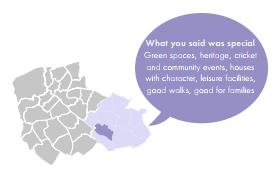
It is widely recognised by those who live here and visitors often comment on the village-feel, our greens, a sense of history and the mix of interesting buildings.

We always ask developers to respect this character when they come forward with new buildings and it is important to protect it.

Describing Cricket Green’s character isn’t easy. It’s a complex place shaped over centuries of development and change. The task has been taken on by Merton’s new Character Study which is being consulted on by Merton Council.

We’ve welcome the study. It is much needed and a vital complement to the new Local Plan that will guide development well into the 2030s.

Merton Council has already had one false start when it produced studies for 22 of Merton’s 36 character areas between 2011 and 2015 but failed to finalise them and give them legal weight when planning decisions are made.

The new Character Study misses out on the richness of the unfinished work. By providing an assessment of the complex character of Cricket Green in just 103 words it leaves our special neighbourhood short changed.

The earlier Character Study now being set aside devoted over 1,400 words to Cricket Green.

Merton Council’s approach to preparing the Character Study means it owes more to the view of external consultants than local communities. Despite years of asking to be involved there has been only limited consultation and the character descriptions of 20 out of the 36 neighbourhoods across the Borough are informed by comments from fewer than ten people.

We have stressed the importance of recognising Mitcham as a village and addressing the importance of our registered greens and the special qualities of Mitcham Common. We have welcomed Merton Council’s acknowledgment of the importance of the historic crossing of the Wandle at Mitcham Bridge which has been misnamed in the controversy over building a new “Bishopsford Road Bridge”.

For Cricket Green we have taken Merton Council’s text and redrafted it to reflect local priorities. See our proposed changes in the graphic at the bottom of this post.

Our proposals have been informed by the work behind the Cricket Green Charter published in 2019 after we contacted over 5,000 households. The changes we propose recognise the true history of Mitcham cricket ground, put more emphasis on the important role played by mature trees and look towards the sensitive re-use of important sites such as the Wilson, Birches Close and the Burn Bullock.

Merton Council is also consulting on a draft Toolkit to secure better quality design in new buildings on the many small sites across the Borough. Sites of less than a quarter of a hectare have been responsible for over 60% of new homes built in the the borough in last 15 years.

We’ve welcomed the approach while also stressing that it will require more than the publication of a Toolkit to deliver the necessary sea change in Merton’s culture which will secure quality design informed by early community engagement and local preferences in new development.

You can read our comments on Merton’s draft Character Study here.

You can read our comments on Merton’s draft Small Sites Toolkit here.

Reviewing Merton Council’s Design Review Panel

In common with many local authorities Merton Council uses a Design Review Panel to help it assess the design quality of new developments.

This is made up of external architects, urban designers, transport planners, landscape and other professional who review schemes, often well before a planning application is submitted.

We welcome design review. When operated transparently and well it can provide insight and support to raise the game in the quality of design. There are also risks, especially when it operates in a deep seated culture that views the role of the Design Review Panel as a closed group of behind-the-scenes advisors that stands separate from normal standards of public scrutiny or engagement.

Government policy is placing ever more emphasis on design quality and the role of design review and it also features in Merton’s new Local Plan. It is timely therefore to have Merton’s approach put under the spotlight by the Sustainable Communities Overview and Scrutiny Panel and we’ve drawn a number of issues and concerns to its attention in a detailed submission.

The bottom line is that Merton’s Design Review Panel is not fit for purpose.

It doesn’t meet the industry standard and Merton Council has chosen not to sign up to the Mayor of London’s Quality Review Charter.

Merton is an outlier in having the Chair of its Planning Applications Committee also as Chair of its Design Review Panel seemingly oblivious to the problems this causes.

There is evidence that Merton’s constitutional safeguards to prevent any conflict are being breached – including the then Chair of the Planning Applications Committee voting to grant planning permission for a development that was subject to design review at a meeting she also chaired.

The Design Review Panel has other failings including:

  • no agreed terms of reference
  • no details on the Panel members and why they are qualified to serve
  • no controls over the length of time Panel members serve, with some exceeding 10 years
  • no transparent mechanism for handling conflicts of interest where Panel members are
  • working on development projects in Merton
  • failures to publish reports or provide advance notice of meetings
  • holding reviews of Merton Council’s own developments behind closed doors
  • the same officer who provides professional advice on urban design also running the Design Review Panel and writing its reports
  • holding review by email despite commitments not to do so and failing to publish their contents even where meetings would otherwise be held in public
  • operating an outdated traffic light system that rates schemes as Red, Amber or Green and which is regularly abused
  • failing to design review some controversial developments, including a large block of flats on Metropolitan Open Land at Imperial Fields described by Merton Council’s design officer as an “office block in a car park”

We’ve made 22 recommendations for reforms which will guarantee the probity of design review and ensure the Design Review Panel operates transparently and effectively. These can all be delivered in six months.

You can read our submission on the Design Review Panel here

You can also see our submission as a paper for the Merton Council Sustainable Communities Overview and Scrutiny Panel meeting on 23 February 2021 here

You can watch that meeting and meetings of the Design Review Panel on Merton TV

Merton’s Local Plan – friend or foe?

Question – What do the following have in common? The fate of Mitcham cricket pavilion. Proposals for over 1,000 new flats within 10 minutes walk of the cricket ground. The future of the Wilson Hospital. Having shopping parades on London Road and Bramcote Avenue. Protecting Mitcham’s greens and village character. Keeping business and jobs alive in workshops on Lower Green West. Enjoying the avenue of trees on Three Kings Piece. Whether new tower blocks will be built in Mitcham. How many local people can afford new homes in Cricket Green. Proposals for a new road built across Mitcham Common for heavy lorries?

Answer – Merton’s new Local Plan

The fate of all of this and more depends on developers getting planning permission to make changes to our neighbourhood. The main guide to whether planning permission is given is the planning policy in Merton’s Local Plan. The Local Plan is now up for review and a new set of draft policies has been published which will last till 2035. The new Plan also earmarks eighteen sites around Mitcham for development.

It is no surprise, therefore, that a new Local Plan has prompted our most comprehensive representations yet to Merton Council about how it should plan for new building, support the community and protect the heritage, open spaces and wildlife that makes Cricket Green so special. Too much of our neighbourhood has been changing for the worse, forever, as a result of poorly located and designed new buildings and conversions and the unnecessary loss of trees, green space and heritage.

The new Local Plan is a chance to turn this around. With a strong approach driven by local needs and priorities it can be the friend that will care for Cricket Green, raise standards and turn away those who will damage our neighbourhood. In the wrong hands it could turn out to be Cricket Green’s worst enemy. We’ve set out our stall for what needs to happen. One thing is clear – much more work is needed on the Local Plan to make it fit for purpose.

Our 12,000 word submission includes proposals which seek the following:

  • Policies which can actually deliver on the Plan’s strong ambitions, including to remove disparities between the east and west of the Borough, rather than leave them as an undeliverable wish list.
  • Putting protection of Merton’s green spaces, wildlife and heritage assets at the heart of a “Spatial Vision” that currently omits them.
  • Recognising Mitcham’s village character as the centrepiece of its planning policies with a broader focus on social, community, cultural, environmental and heritage and less emphasis on encouraging anywheresville high street brands.
  • Policies to protect an inventory of identified community assets, neighbourhood shopping parades and scattered employment sites in Mitcham.
  • The addition of the Merton Dementia Hub site following announcement of its closure as a new allocation with the potential for community-led housing.
  • Strengthening 13 other development site allocations, including securing community ownership of Mitcham cricket pavilion and development at The Wilson which respects its heritage and open space.
  • Deleting the site allocations for the former Canons nursery and Raleigh Gardens car park as undeliverable following the closure of Merantun Development Ltd.
  • Deleting the site allocation at Imperial Fields which continues to be designated as Metropolitan Open Land, Green Corridor and Open Space.
  • Major strengthening of the Plan’s approach to securing high quality design, including preparation of a Design Code for Mitcham Cricket Green.
  • Recognising Mitcham’s registered Town Greens as heritage assets and identifying The Canons as one of a new local list Merton historic parks and gardens.
  • Protecting the panoramic Wandle Vista on Mitcham Common identified in award winning research.
  • Proving more protection for scattered employment sites and supporting environmental improvements on Willow Lane Industrial estate.
  • An overhaul of Merton’s weak planning policies for protecting trees, supporting an accelerated increase in the tree canopy and measures to ensure any essential tree felling is accompanied by new planting of trees of greater value.
  • Deleting the dinosaur road scheme providing another access to Willow Lane Industrial Estate which was rejected in the 1990s and which would cause unnecessary loss of Mitcham Common and damage to the Conservation Area at Aspen Gardens.
  • Providing for improved cycling conditions along Commonside West without losing any part of Three Kings Piece to a cycle lane.
  • Six additional proposals for improvements to Cricket Green’s public realm and for people on foot.
  • Strengthening policy to secure an increase in truly affordable homes and require all new homes to have opening windows in at least two different elevations.
  • A major edit to address the draft Plan’s myriad errors, grammatical mistakes and omissions and provide a structure and approach that makes sense to all who will need to use it.
  • Further public consultation on a Plan that looks at least the required 15 years ahead and is supported by much stronger evidence to back up its approach.
  • An overhaul of the measures to ensure delivery of the Plan is effectively monitored and reviewed.

You can delve deeper into our full submission here.